“What’s the best print process for our packaging?” is a question we often hear. It won’t surprise you to hear that there isn’t a simple answer but we’ll try to break it down here.
Let’s start with the available print styles:
Flexographic (Flexo)
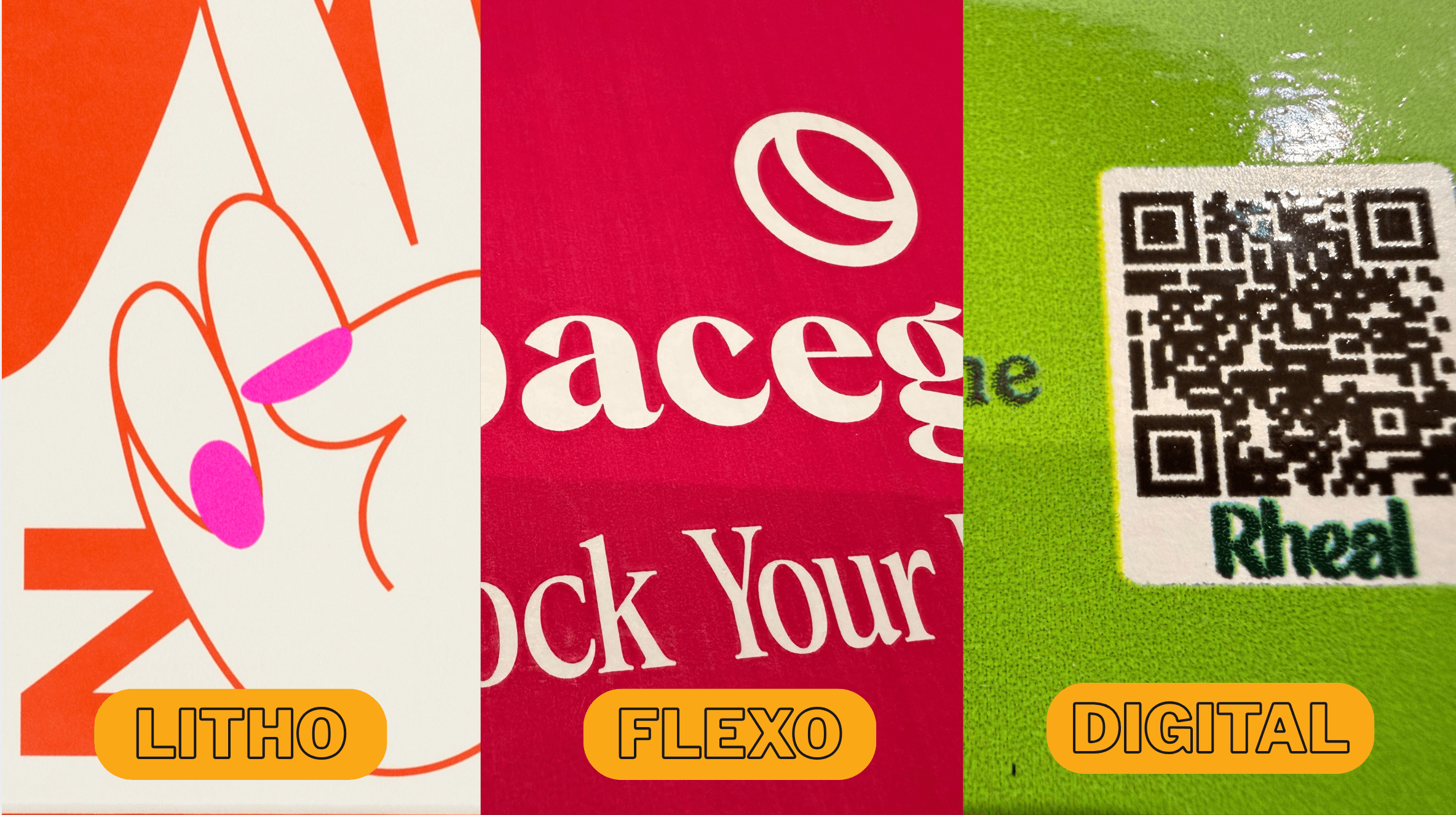
The most common print method used on corrugated boxes including custom mailer boxes. It typically offers unbeatable value at scale but there are some limitations to what you can print. Flexographic printing is a bit like using a large rubber stamp mounted on a cylinder: a print plate (stereo) transfers ink directly onto the board or paper. Each colour has its own print plate. It is called a direct print method because your design (in the form of print plates) touches your substrate material.
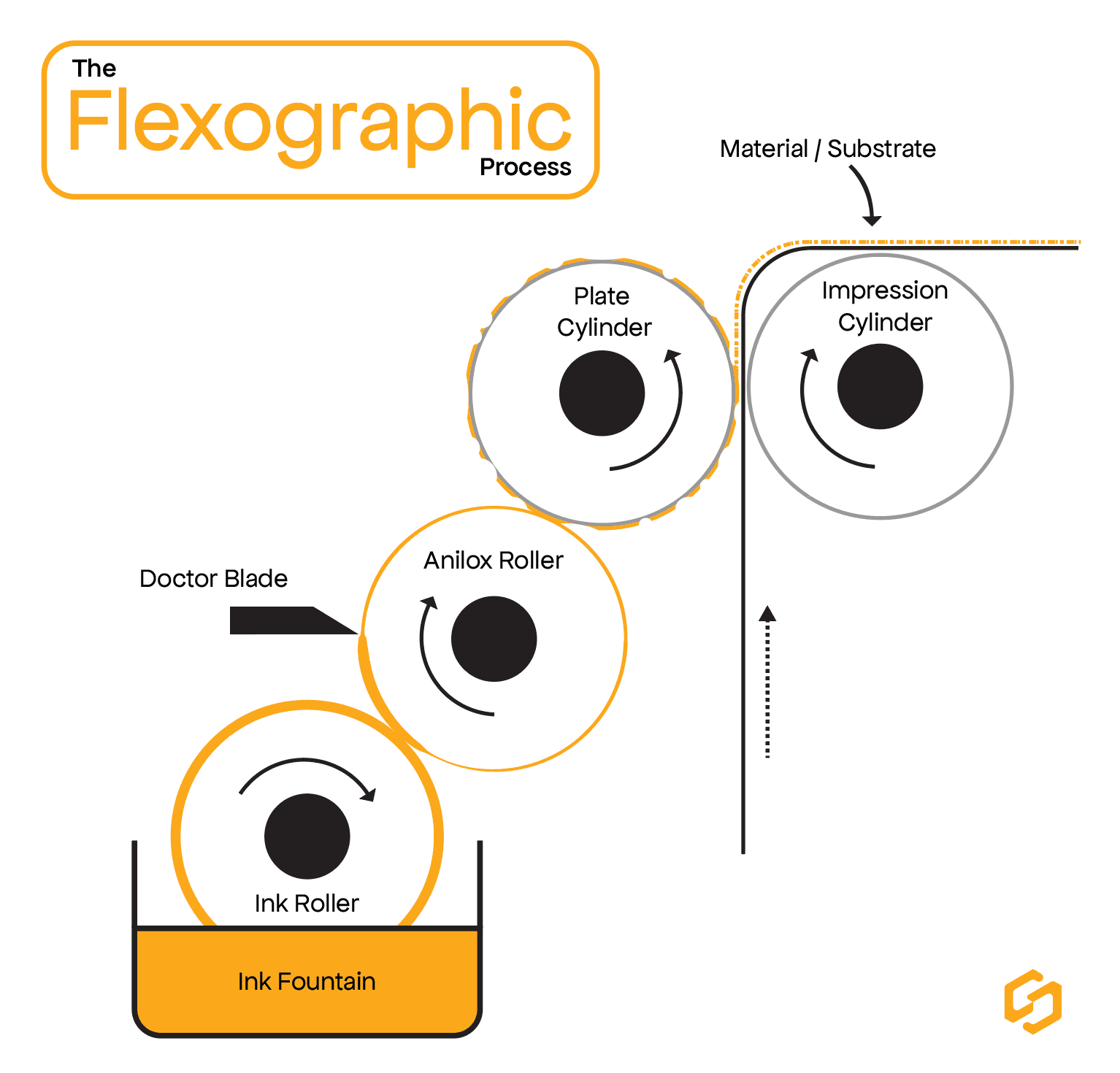
The above configuration is repeated for each colour.
| Component | Description |
|---|---|
| Ink Fountain | Each colour has its own ink reservoir |
| Ink Roller | Collects ink from the fountain |
| Anilox Roller | Transfers ink to the print plate |
| Doctor Blade | Controls the amount of ink on the anilox roller |
| Plate Cylinder | Holds the print plate (stereo) |
| Impression Cylinder | Controls the print pressure applied to the plate cylinder ensuring clean and consistent printing |
| Material / Substrate | Corrugated board, cartonboard or other |
| Pros | Cons |
|---|---|
| Excellent economy for medium to high volume because of the fast productions speed | High setup costs (plates / stereos can range from £250-£800 per colour) |
| Bold, vibrant and accurate colours | Detailed designs may not suit flexo printing |
| Eco-friendly process | Dark colour inks can rub |
| Widely available | Max number of colours can be as low as 2 but up to 9 (rare) |
Lithographic (Litho) / Offset
Often the go-to method for printing product boxes for cosmetics and consumer goods. This process allows you to create super detailed designs, including photo reproduction. Unlike Flexo, this is an indirect method of printing with an image from your print plate transferred to a blanket, and then from the blanket onto your substrate (hence the name “offset”). Typically in this method, the substrate is a roll of paper, which is then laminated to thicker paperboard or to corrugated board. Litho allows for very fine control during print meaning that you can achieve arguably the highest quality of print available on paper products. Common printing equipment also opens up special finishes like spot varnish, as well as matte and gloss.
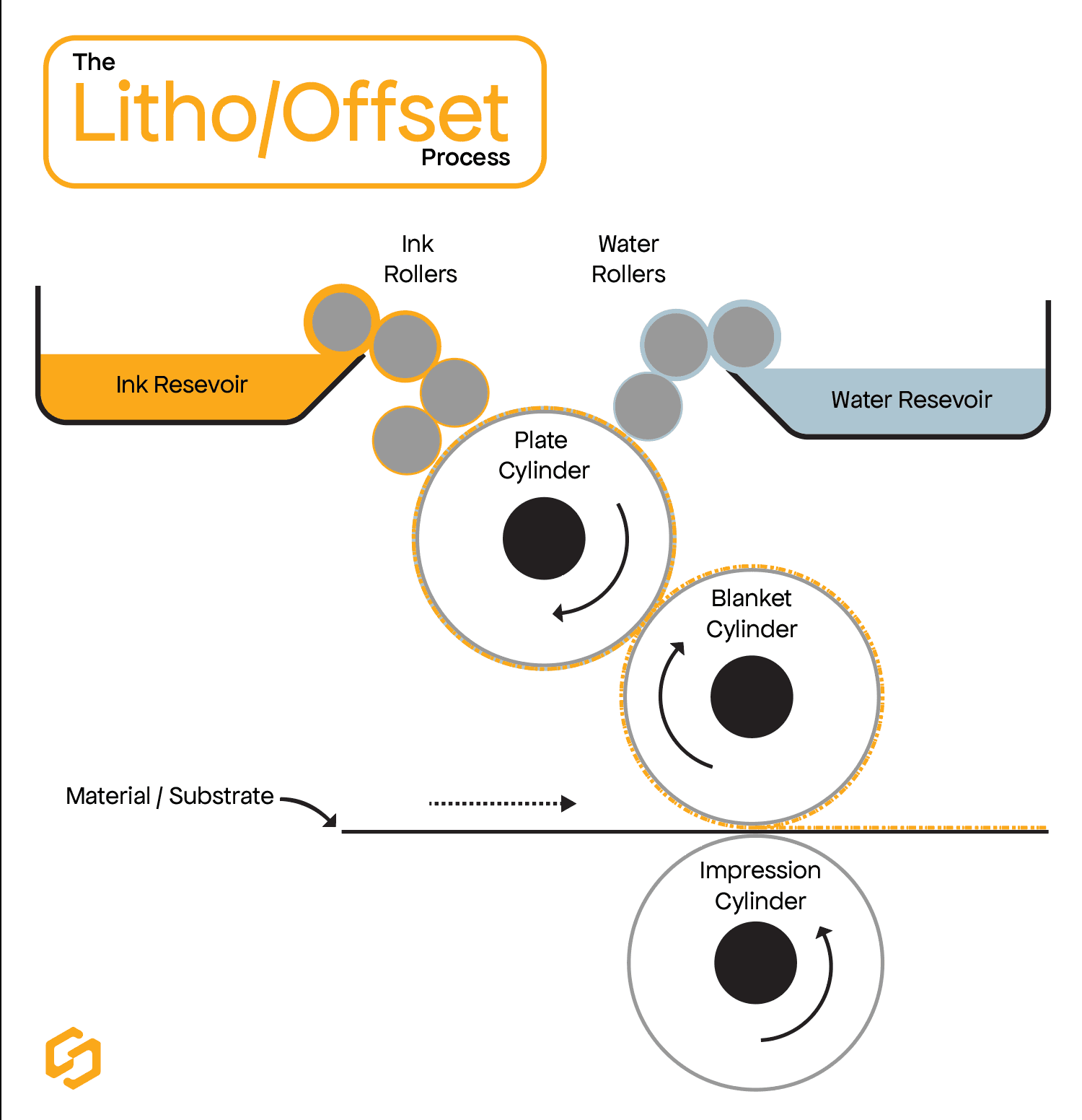
The above configuration is repeated for each colour. Litho presses are typically set up with CMYK colour bays (4) and may have additional colours or varnish bays. Some projects are set up solely as CMYK while others can combine that with additional spot colours. Or you can run purely spot colours dependent on the printing equipment. Printing more than 2 spot colours is often more expensive than running a CMYK print (also known as four colour process printing).
| Pros | Cons |
|---|---|
| High quality of print allowing for detailed designs and multiple colour shades | Typically more expensive than flexo printing |
| Print plates are created new for each run meaning setup costs are included in the price | Typically more expensive than flexo printing |
| Specialty finishes are more easily achieved | Colour matching can be less accurate (especially when running CMYK) |
| Ink is perfectly cured | Double sided designs might see minor cracking (due to the lamination process) |
Digital Printing
This method offers the quickest design to output of any of the available print methods. They work like an industrial version of your home inkjet printer. It is similar to flexo in the sense that it is set up as CMYK printing (although some suppliers have additional colour bays to ensure comprehensive colour availability). Print heads apply ink in a very precise way, which allows for full colour and photographic style printing. Another advantage is that you won’t need print plates, saving cost and time on productions. Boxes, cans and paper mailers are often printed using this method.
| Pros | Cons |
|---|---|
| Fast turnaround times | Some colours (typically lighter colours) are harder to produce |
| Ability to print multiple designs in one single run without adding cost | As the print is made up of very small pixels, you may notice this pixellation on darker block colours |
| Flexibility on design style, with most designs possible | Less economy on larger runs |
| Affordable for small quantities |
Screen Printing
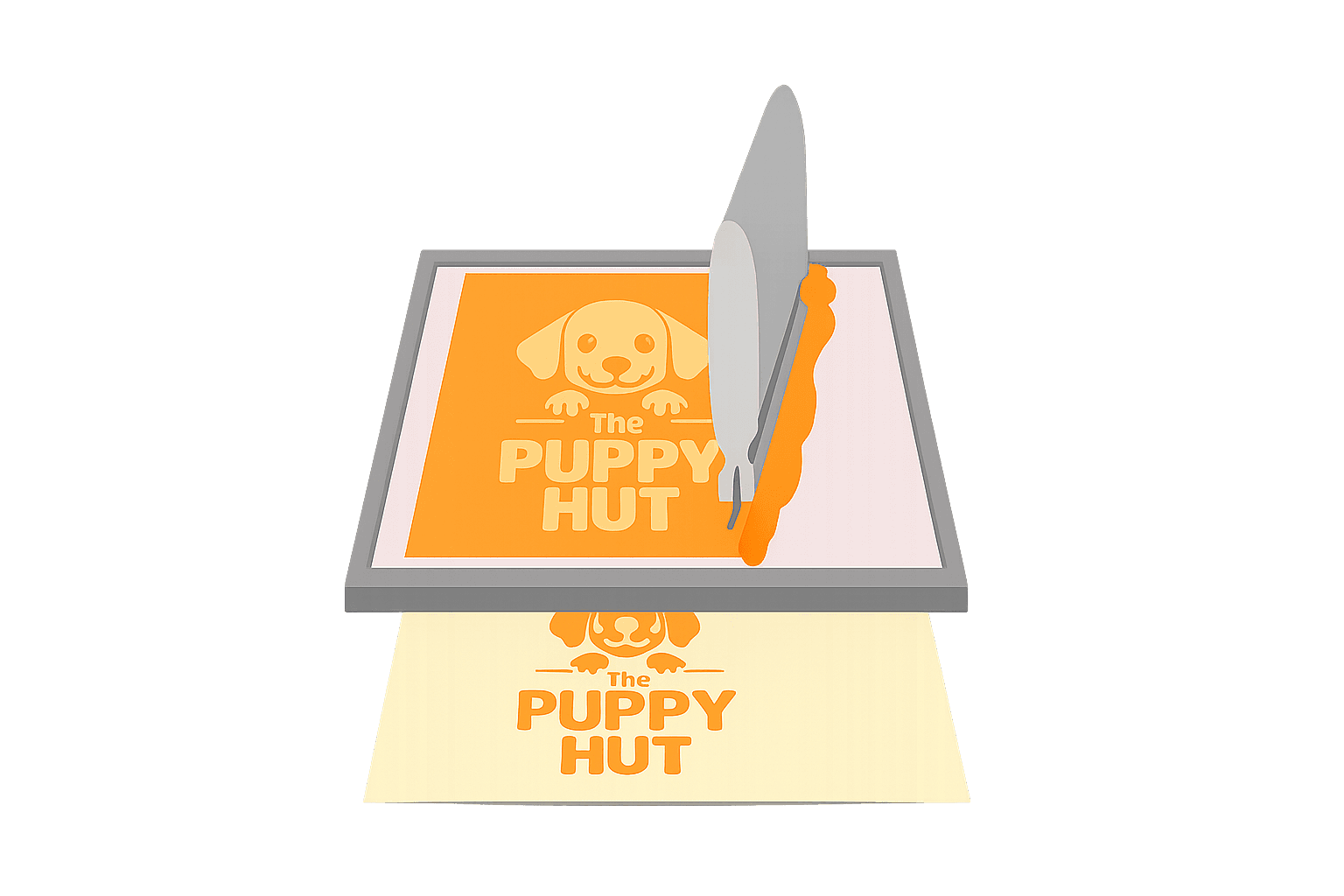
A less common print process for paper products than the others but available in China and some other locations. Can be a very effective method for printing solid white colours on brown or dark surfaces (where you want a very opaque finish). The method works by creating a screen, placing this on top of your substrate and pressing ink through the screen using a squeegee. This method is typically more common on t-shirts or tote bags but sometimes has its place in the packaging world. Bottles and jars also often use this print process.
| Pros | Cons |
|---|---|
| Solid opaque colours | Expensive comparatively |
| Slight texture that can look premium | Generally useful only as a specialty finish: you cannot really create full box designs using this method |
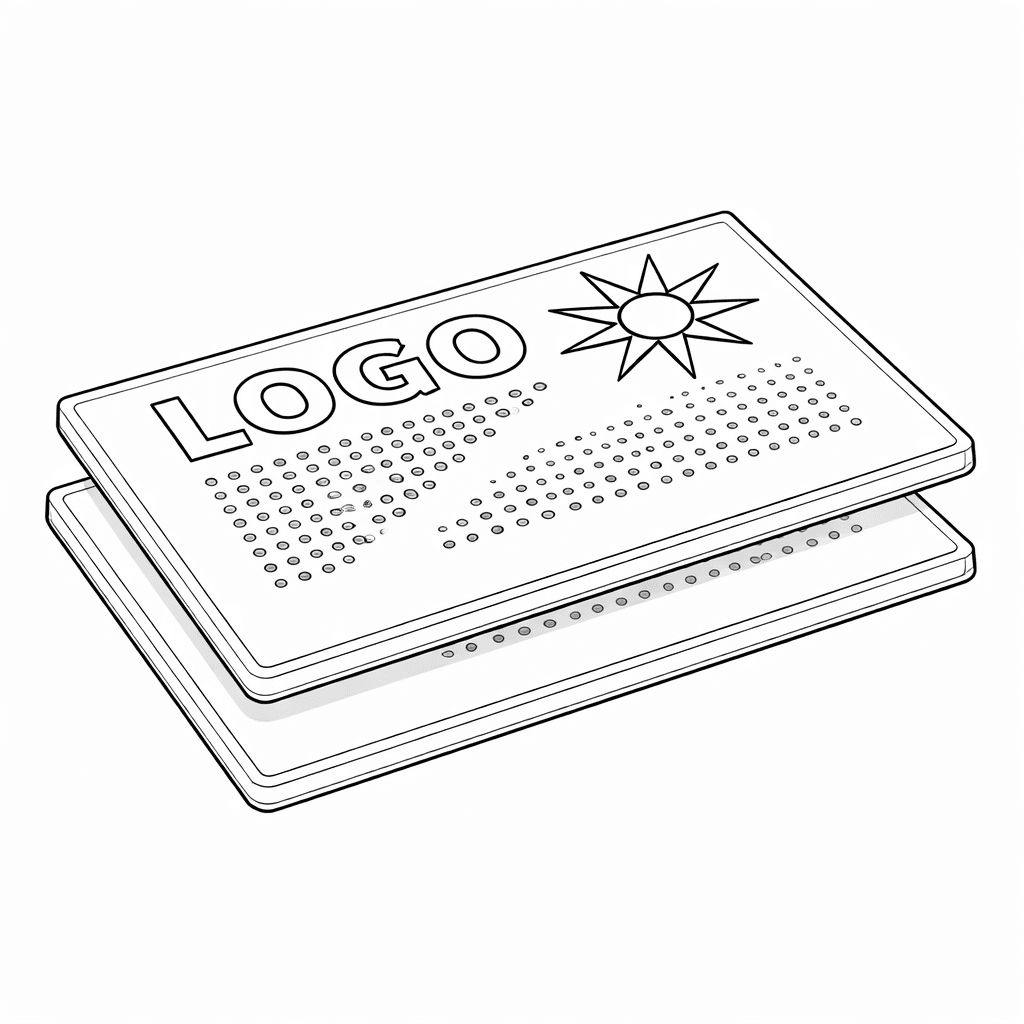
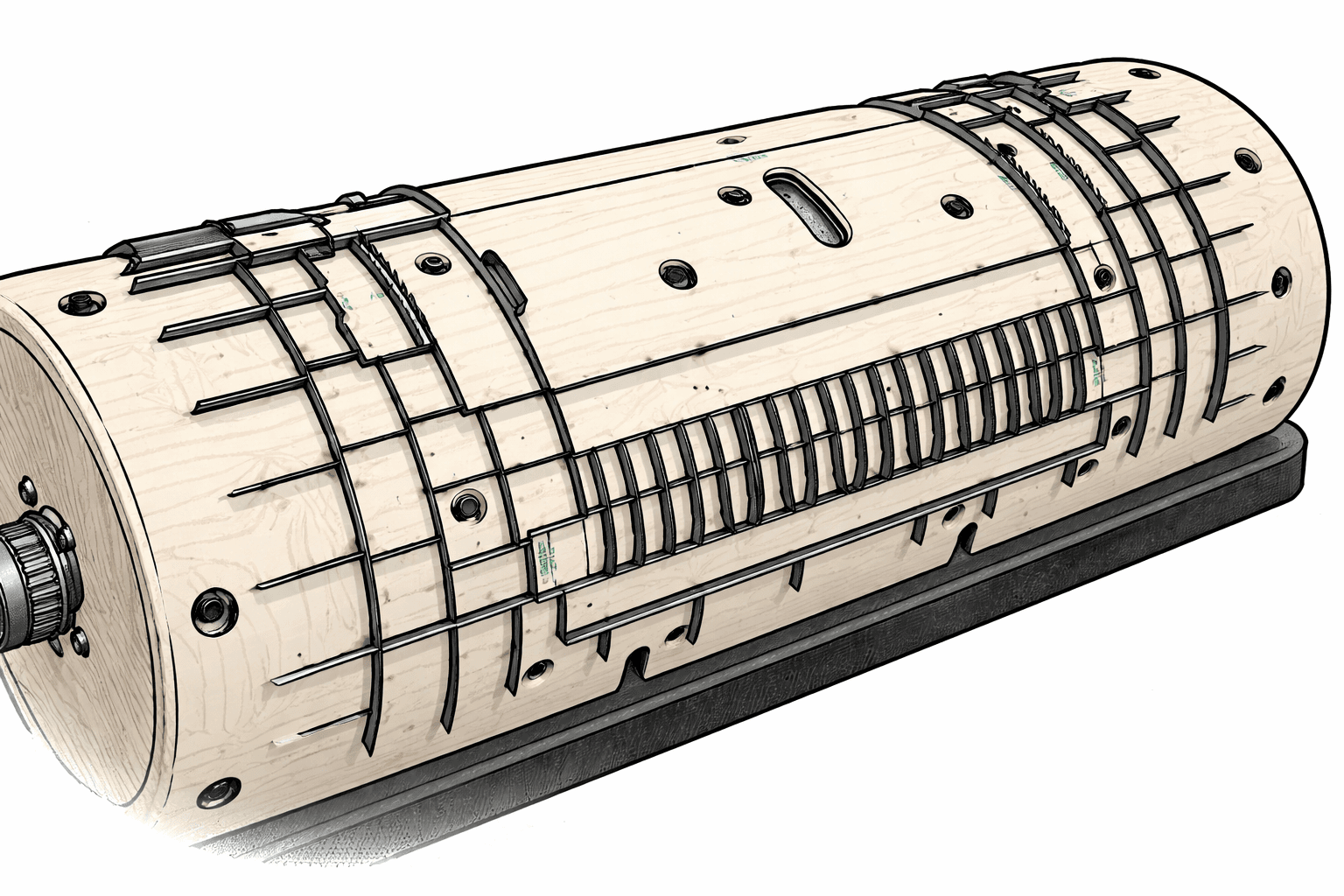
Setup and Tooling
Many print processes require setup costs and one-time tooling. Read on for a summary of these and also for our glossary of terms.
| Glossary | |
|---|---|
| Ink Reservoir | Each colour has its own ink reservoir |
| Water / Damping Reservoir | Holds water |
| Ink Rollers | Moves ink onto the plate cylinder |
| Water / Damping Rollers | Moves water onto the plate cylinder |
| Plate Cylinder | Hold the print plate |
| Blanket Cylinder | Image from the print plate is transferred to the blanket |
| Impression Cylinder | Controls the print pressure |
| Material / Substrate | Your paper is sandwiched between the blanket and impression cylinders |
| CMYK (4 Colour Process) | Print plates are created to overlap and create multiple colours by blending Cyan, Magenta, Yellow and Black (K) |
So what process is right for you?
The answer to the question is really based on your priorities, your design and your budget. Some choices will be made for you based on your needs. For example, if you need something very fast (3 weeks or less), digital might be your only option.
The following factors will usually dictate your choices:
Time - what is your deadline?
Cost - budget is a major factor
Quantity - some processes only make sense at higher quantity
Design - some designs won’t work with some processes
Quality - different processes enable different quality of finishes
The table below shows a summary of your choices:
| Best for | ||||||
|---|---|---|---|---|---|---|
| Short lead times | Low quantities | Medium to large runs | High detail | Colour Reprodu-ction | Multiple designs | Unit price |
| Digital | Digital | Flexo | Litho | Flexo | Digital | Flexo |
Got a project in mind? Talk to us
Let’s have a chat - we can talk through all options and give you guidance around budget, design and timelines. Or visit our knowledge hub.